Lightchain AI is relaunching its testnet with a redesign that separates transaction processing and AI workloads. Test balances and contracts reset, while mainnet remains unchanged.
Lightchain AI announced on October 24, 2026, that it is relaunching its testnet with a redesigned system for processing transactions and AI requests. The developers described the relaunch as the first public step of an architecture they have spent eight months building, while stating that the production network, or mainnet, remains unchanged.
The reset clears testnet balances and deployed contracts while retaining chain ID 8200, the identifier wallets use to connect to the network. The faucet, which distributes free test tokens, will be replenished, and the explorer will rebuild its transaction history from the first block. Mainnet users have no action to take.
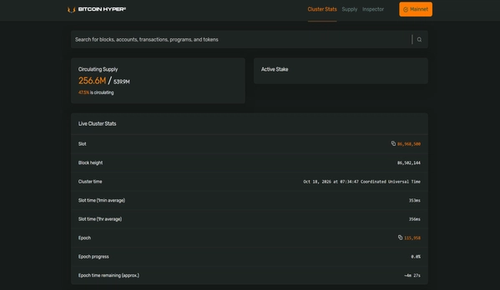
By October 25, the public testnet endpoint was reporting a new genesis timestamp of 06:23:43 UTC that day. Mainnet continued to report its May 5 genesis. The developers plan to publish performance benchmarks and a full technical explanation after completing measurements.
Separate Processing for Transactions and AI Workloads
The proposed architecture separates transaction ordering, execution, and final settlement. A transaction-ordering service, called a sequencer, would place incoming transactions in a shared queue, while separate Ethereum-compatible chains, called shards, would process them. This compatibility allows developers to continue using familiar Ethereum tools and smart contracts.
Lightchain claims the sequencer would acknowledge transactions within tens of milliseconds, with shard blocks produced at intervals measured in hundreds of milliseconds. Acknowledgment would confirm a transaction’s place in the queue. Final confirmation would come later, when the underlying blockchain records the shard’s results.
Deposits would lock funds on the underlying blockchain and make the corresponding amount available on a shard. The developers say users could withdraw those funds even if the transaction-ordering service went offline.
The AI computing marketplace would move to a dedicated shard. Its redesigned workflow would use fewer transactions per job. Encrypted AI requests and responses would be stored outside the blockchain. The blockchain would retain their hashes—digital fingerprints used to check whether the data has changed. Workers, which are the computing providers that run AI tasks, would receive event notifications instead of repeatedly checking the blockchain for work.
Lightchain’s current worker documentation describes encrypted AI responses being stored on the blockchain.
The announcement also introduces plans for a second category of worker that can participate without a graphics processing unit (GPU), the hardware commonly used to run AI models.
The redesign follows Lightchain’s September release of its chat-v2 public beta, which introduced blockchain-based AI requests with fees starting at 0.02 LCAI per message. Its existing system already allows eligible workers to claim sessions through smart contracts, replacing a central service that previously assigned requests.
Lightchain began its presale in November 2024 and reported raising more than $21 million before LCAI started trading on Uniswap on January 27, 2026. The token fell 80% within minutes of trading. After postponing an earlier mainnet launch scheduled for July 2025, the project subsequently announced that the mainnet went live on May 7, 2026.
Disclaimer: This article is not financial advice. Investing in cryptocurrencies involves significant risk, and you should conduct your own research or consult a financial advisor before making any investment decisions.