Key Takeaways
- • Timothy reports that Finixio may control crypto gambling platforms like Lucky Block and Golden Panda.
- • Mega Block Gaming appears tied to Finixio through affiliate structures and archived hiring records.
- • Timothy alleges that Finixio-linked gambling sites used fake reviews and offshore licenses.
- • Telegram and Twitter scams were reported by users during the Pepe Unchained presale.
- • Wall Street Pepe was heavily promoted by Clickout Media, only to collapse rapidly after launch.
- • Timothy suggests presale funds may have been reused to simulate token demand.
- • Official filings reviewed by Timothy appear to show shared ownership among several insiders.
Editor’s Note (November 2025):
The original investigative reports by Timothy M. on recleudo.com referenced in this article are no longer publicly available. This article remains as an archival summary of those reports, which were accessible at the time of publication. TheHolyCoins makes no claim as to the current validity of the removed material.
In our previous article, we summarized episodes 1 through 3 of Timothy M.’s investigative series, which alleged that the Finixio and Clickout Media network controls dozens of crypto presales, meme coin launches, affiliate media sites, and even the payment and wallet infrastructure used to move funds. Those episodes outlined a pattern of centralized control over marketing, presale funding, token launches, and token dumping, often resulting in projects that vanish shortly after launch. At the same time, the same insiders benefit at each step.
This article continues the investigation with episodes 4 and 5. Timothy now focuses on the group’s alleged gambling network, the personnel behind online casinos like Lucky Block and Golden Panda, and the affiliate structures used to promote them. He also reveals financial documents and official business records connecting the same individuals to developer firms, wallet apps, and what Timothy describes as ‘shell companies’ in his reporting. Timothy argues that these documents move the investigation from circumstantial connections to what he interprets as documented ownership and transaction flows.
An Alleged Finixio-Controlled Gambling Empire: Lucky Block, Mega Block Gaming, and Affiliate Profits
Episode 4, titled "On the surface, an ecosystem; underneath, the same owners profit from financial irregularities and suspected malfeasance", begins with a detailed look into crypto gambling platforms like Lucky Block, which Timothy reports are allegedly operated by the same core Finixio team. The episode opens with Timothy reflecting on how he initially believed the gambling and affiliate network was their core business. Still, it now suggests these operations may actually serve as a front for something even bigger. The Lucky Block token’s source code was hosted on Finixio’s GitHub.

Personnel overlaps run deep. According to Timothy’s reporting, Lucky Block’s CTO, James Thatcher, is also the Head of Technology at Finixio and the Chief Technologist at Clickout Media. James Bason serves as the Chief Product Officer at both Lucky Block and Finixio. Nelson Campelo is listed as the growth manager across Lucky Block, Finixio, and Clickout Media.
Mega Block Gaming (MGB), another entity profiled in the episode, builds and markets crypto casinos. Timothy suggests that it is also connected to the Finixio network. MGB’s job listings are redirected to MBG Digital Agency, which Timothy links back to Finixio through archived hiring pages and via Diversum Partners, a crypto casino affiliate platform associated with Lucky Block, Instant Casino, MegaDice, Golden Panda, and TG Casino. In one job post, Timothy shows that MGB openly states that Finixio is the hiring company behind the scenes. Although mentions of Finixio have since been scrubbed from some listings, Timothy includes archived and current references that preserve the connection.

Timothy concludes that the group appears to run an integrated gambling network using overlapping leadership, affiliate deals, shared developers, and rebranded entities.
Golden Panda, Affiliate Funnels, and Alleged Casino Abuse
Golden Panda is one of the crypto gambling platforms promoted through the same Finixio-linked affiliate funnel. While its corporate ownership isn’t as publicly detailed as Lucky Block’s, in Timothy’s analysis, it's grouped with the same cluster of sites promoted through Diversum and MGB, both of which are linked to Finixio.
Golden Panda shows a pattern of user complaints across TrustPilot and Casino Guru. Reviews mention blocked withdrawals, unresponsive support, and potential account manipulation. Timothy alleges that some 5-star reviews appear suspicious or inauthentic, based on his analysis.
These allegations are consistent with Lucky Block, which has its own history of user complaints. In both cases, the sites operate under offshore licenses, such as those in Costa Rica, making legal recourse almost impossible. Timothy argues that this structure may allow operators to profit while remaining outside stricter regulatory oversight.
Pepe Unchained: Telegram Scams, Missing Token Claims, and a Dormant Project
Timothy's investigation shifts from gambling to crypto presales, beginning with Pepe Unchained, a token that raised $73 million during its presale. Timothy claims that it links to the same Finixio group, including a former executive previously tied to Finixio, who was listed as a co-founder of Pepe Unchained.
Shortly after the Pepe Unchain launch on December 10, 2024, user complaints surfaced across Reddit and social media. Some reported being unable to access their digital tokens using Best Wallet, the crypto wallet app promoted by the project. Others described being directed by Telegram admins, allegedly in channels linked from the official Pepe Unchained website, to submit their 12-word seed phrases, a known scam technique. Timothy surfaced these complaints and accounts through public user reports and firsthand screenshots.
One Reddit post detailed how a user was told by a Telegram admin to manually claim tokens by connecting their wallet and providing the recovery phrase. Others recounted similar stories involving verified Twitter accounts directing them to scam mirror websites, such as mobile-pepeunchained[.]com. Timothy clearly notes that while these incidents may include impersonators, their presence in channels linked directly from official project pages raises serious concerns about due diligence or internal complicity.
As for development, Timothy points out that there have been no visible updates since launch. The whitepaper remains sparse (8 pages), and despite claims of building a new Layer 2 network, no further explanation or roadmap progress is available on the official site. He doesn’t assert that no development exists, but argues that what’s public fails to justify the $73 million raised. The project appears stalled, underdeveloped, and unaccountable.
Wall Street Pepe: Presale Overload, Fake Demand, and Price Manipulation
Timothy describes Wall Street Pepe (WEPE) as following a similar trajectory but with even more glaring manipulation. It raised $57 million during its cryptocurrency presale and claimed only 20% of tokens would be sold. However, Timothy shows that nearly the entire 200 billion supply was sold before launch, breaking their commitments as outlined in the whitepaper and creating a shortage of their tokens for crypto investors to claim. Absurdly enough, the WEPE token was listed at a price 42% lower than the presale rate.
Finixio-linked media outlets, such as Techopedia, 99Bitcoins, and CryptoNews, heavily promoted the project, often recommending Best Wallet for purchases. These same outlets later falsely presented a brief price uptick in February and March as driven by whales entering the market, which Timothy reveals was likely staged.
Using on-chain forensic analysis, Timothy identifies the wallet 0xb29d...052 as one of the so-called “whales.” During a short-lived price surge, it made dozens of identical purchases of around $907 each on March 8. Earlier, this same wallet had made significantly larger purchases right before and during the token’s launch, on February 17 and 19. These earlier buys align with the peak moment when WEPE's price briefly rose before its sharp decline.
Timothy traces these buys to a sale contract address (0x9a15...60f7), which funds an intermediary wallet (0x570d...deeb), which then funds the “buyer” wallet. That same intermediary also sent millions in ETH to hot wallets via an exit wallet (0x727c...a80f). The path suggests a deliberate loop: the project simulated market activity by using presale funds to buy its own token, which was then recycled back or cashed out.
The analysis relies on Breadcrumbs, a wallet visualization tool that maps transaction paths. Timothy uses it to show that over 4,000 ETH (~$10M) is flowing through these wallets, with connections to additional wallets that send and receive funds in a circular loop. Timothy describes the flows as appearing structured in a way that could mimic demand and facilitate insider exits.
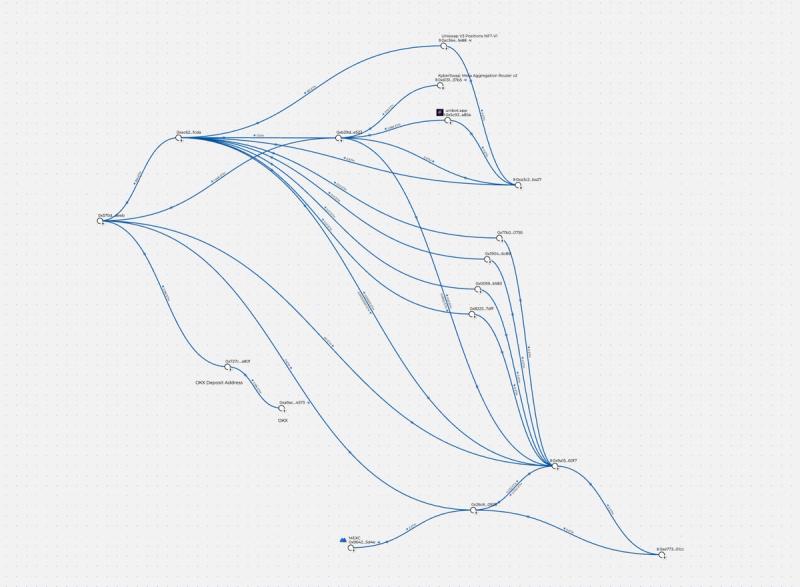
Rather than organic price movement, Timothy frames this behavior as orchestrated wash trading, amplified by Finixio media coverage that encouraged retail investors to join in at inflated prices. The presale participants were left holding tokens with little liquidity and no upside, while the insiders exited with millions of dollars.
Episode 5: Official Records Suggest Finixio’s Ownership and Control Structure
Episode 5, titled "Follow the money: How I found out who owns what, and what they’re making from it", shifts the investigation from behavioral patterns to verified ownership records. After four episodes detailing how the Finixio and Clickout Media network allegedly controls crypto presales, affiliate gambling operations, and wallet apps, Timothy now traces the paper trail: company filings, profit declarations, WordPress admin panels, and registry data from the UK and Bulgaria. These documents, according to Timothy’s analysis, confirm that the same small group of insiders—James Fennell, Adam Grunwerg, Samuel Miranda, Danail Petrov, and Tihomir Todorov—control not just the brands but the infrastructure, legal arms, and financial accounts used to operate and profit from the ecosystem.
Best Wallet, Tamadoge, and Shared Developer Infrastructure
The episode opens by examining Best Wallet, a recurring recommendation across Finixio-linked crypto presale projects. It is owned by Best Web3, a company originally registered to lawyer and professional liquidator Tihomir Todorov, who later transferred it to Mihail Nedelchev. Both individuals are also associated with other projects, such as Tamadoge, which experienced a significant value drop following its launch. According to the filings Timothy reviewed, the registration address for Best Web3 appears to match an address previously associated with Block Labs.
Timothy’s Findings on JEF Holdings, Block Labs, and Alleged Shell Company Links
In Episode 5, Timothy presents his interpretation of various UK and EU company filings. According to Timothy, these documents appear to show connections between JEF Holdings, ARG Media, SBM Holdings, and Block Labs. Timothy alleges that these companies may have shared ownership structures based on the filings he reviewed.
According to Timothy, Block Labs reported €23 million in profit in 2022 and €65 million in 2023.
He notes that ARG and SBM later sold their 37.5% stakes in Block Labs to JEF Holdings for €191 each in 2024, despite the company’s substantial profits and crypto holdings of €26.7 million.
Legal, Financial, and Development Control Under One Roof
According to Timothy's investigation, the legal entity Block Law appears to be closely associated with the same individuals based on his review of filings. It is 70% owned by JEF Holdings, with the remaining 30% split between Danail Petrov and Tihomir Todorov, both of whom are already linked to other Finixio assets. Todorov, originally listed as the owner of Best Web3, also serves as legal counsel and plays a visible role across the network. Petrov was previously the director and partial owner of Block Labs. Together, they form a closed loop of ownership and control over the legal, financial, and development infrastructure behind the previously profiled crypto presales and gambling platforms.
The financial trail outlined in this episode appears to support what earlier episodes suggested: the same group of people directly owns and operates the Finixio-connected platforms, wallets, and legal vehicles. Furthermore, official ownership documents, leaked administrative access, and internal financial records suggest possible efforts to structure ownership in a way that obscures actual ownership and retains profits internally. Timothy concludes that, in his interpretation, the documents suggest stronger indications than the earlier episodes, though this remains his analysis, not an established fact.
** The first part of our coverage, focused on Episodes 1, 2, and 3, is available here: Finixio Network Exposed, Part 1.
** The third part of our coverage, focused on Episode 6, is now available: Finixio Network Exposed, Part 3.
** Note: This article is based on publicly available information from Timothy M.'s latest series of investigative reports published on recleudo.com. It aims to summarize and analyze his findings for informational purposes only and does not assert any legal claims or conclusions on behalf of TheHolyCoins.