Key Takeaways
- • Former BlockDAG employee discusses presale handling with Reid Davis
- • Marketing sets deadlines without engineering approval
- • CTO pressured during public February launch AMA
- • CEO lacked direct control over company's funds
- • Sponsorship liabilities existed alongside presale expansion
- • Vesting vote framed to shift responsibility
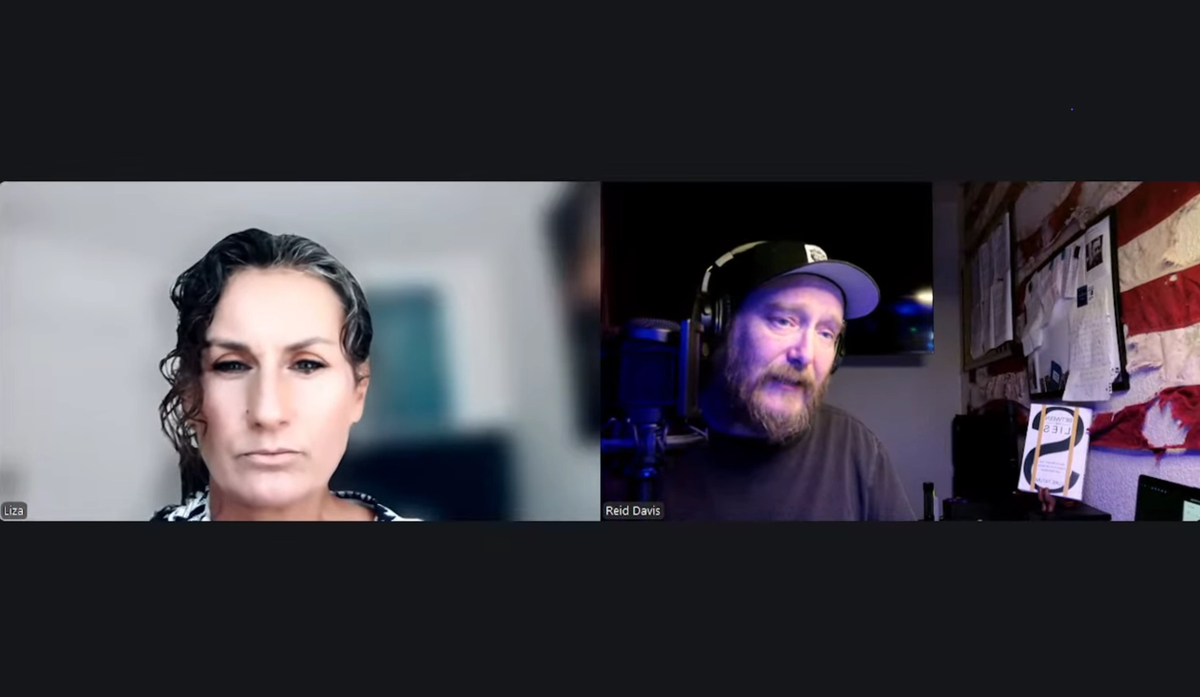
On January 14, 2026, a live-streamed discussion on the BlockDAG Investors YouTube channel featured Liza, a former BlockDAG employee, speaking with Reid Davis about her time at the company, spanning recruitment, operations, and technical coordination.
During the livestream, Liza, whose LinkedIn profile lists her as Liza Van Den Berg, describes her time at BlockDAG, how the company was managed, and what she claims to have witnessed or heard regarding presale handling, fund access, leadership authority, and internal decision-making. Her statements focus on actions she directly observed or was involved in, including disagreements over transparency, payment delays, and what she characterizes as misleading public disclosures.
At the time of the livestream, BlockDAG publicly claimed to have raised more than $440 million through its presale, a figure prominently displayed in its marketing materials and on its website.
Liza’s statements are significant because she was a full-time internal employee with direct exposure to company operations. She describes a progression from recruiter to company staff, relocation to company offices, and direct exposure to senior leadership operations.
Background: Liza’s Role Inside BlockDAG and Her Move to Cape Town
Liza says that her involvement with BlockDAG began as a remote recruiter, a role she held for approximately two months. During that period, she worked independently before being formally recruited into the company by Anthony Turner, who at the time held the CEO title.
Following that recruitment, she says she relocated to Cape Town, South Africa, where BlockDAG maintained offices and where parts of the engineering and operational teams were based. In her account, this transition placed her closer to company decision-making and exposed her to how timelines, budgets, and authority were handled in practice.
She adds that her responsibilities expanded beyond recruitment into broader operational coordination, including interactions with engineering teams and internal communications tied to product readiness and presale milestones.
Marketing Decisions From Dubai and Engineering Deadlines Set Without Local Input
One of the recurring themes in Liza’s statements is the disconnect between marketing decisions and technical reality.
She states that marketing strategy and public messaging were fully controlled from Dubai, with no technical input from the engineering teams in Cape Town. She says marketing announcements frequently introduced new presale updates, technical milestones, or “requirements” publicly before local engineering teams were informed that delivery was expected.
She further notes that Nic Van Den Bergh, who at the time served as BlockDAG’s CMO, later relocated to Dubai during this period, reinforcing the separation between marketing decision-making and on-the-ground development work.
She says these announcements forced engineering teams into repeated emergency work cycles to meet deadlines they had no role in setting.
In Liza’s telling, this pattern is persistent rather than isolated, with engineers repeatedly required to adapt to externally imposed timelines that were decided without technical consultation.
Pressure on Technical Leadership During a Live AMA
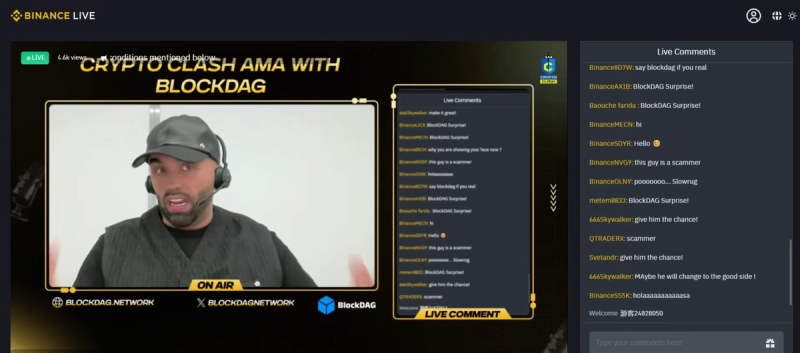
Liza also describes an incident during a live AMA, which took place in late December 2025, in which the project’s CTO, Jeremy, was placed under public pressure about launch expectations.
According to Liza, Gurhan Kiziloz, BlockDAG’s founder, and Van Den Bergh made statements during that AMA that the mainnet launch would take place in February, despite the system not being technically ready. She said Jeremy, who had previously warned leadership that the timelines were too aggressive, was “pushed into a corner on purpose” during the AMA live discussion.
Liza explains that, in such a setting, openly contradicting leadership was not a realistic option. In her words, “If I’m on a live AMA and someone says that, I’m not going to argue with them.” She characterizes the moment as one where silence or non-confrontation could easily be interpreted by the audience as confirmation, even in the absence of an actual engineering commitment.
The AMA’s format and context created public optics that leadership could later benefit from, while the technical team absorbed the blame and consequences.
Control of Company Funds and the Limits of the CEO’s Authority
Another aspect Liza addresses is that, despite holding the title of CEO, Anthony Turner did not control BlockDAG’s funds, and she provides specific operational examples to substantiate this.
She cites Token2049 as an operational example, saying BlockDAG had already marketed the “Builder Zone” and planned to run a buildathon through an external provider that required upfront payment for services and prize-pool funds. According to Liza, the provider received the signup fee, but the prize pool funds were not released. She says the team then had to build out the buildathon “wave by wave” while the event was already underway, with the technical team pulling all-nighters to try to salvage it.
Liza explains that Anthony had to request money on a case-by-case basis, often receiving only partial releases. She states that this pattern applied not only to events like Token2049 but also to staff expenses, operational contracts, and routine obligations, resulting in repeated payment delays.

She characterizes Anthony’s role not as one of executive control but as constant financial bargaining, in which authority resided in title rather than in access. According to her, financial decisions were made elsewhere, and access to funds was unpredictable, inconsistent, and frequently insufficient to meet obligations that had already been operationally approved.
Personal Financial Intervention by the CEO
In one of the more specific personal disclosures, Liza states that Anthony Turner paid employees’ personal expenses out of his own pocket during periods when salaries were unpaid or significantly delayed.
She claims that Anthony covered costs to ensure she would not lose her home during a period when salaries were delayed. According to Liza, this was not a symbolic gesture but a necessity created by the company’s inability or unwillingness to release payroll funds on time.
This example is used by Liza to illustrate what she describes as a broader pattern of internal financial dysfunction, in which senior staff personally absorbed costs to keep operations and personnel afloat.
Presale Allocation, Token Overselling, and the Vesting Vote Narrative
During the live discussion, Davis raises specific concerns about the scale of the BlockDAG presale overselling, stating that the presale allocation was exceeded by more than double the originally intended amount. He explicitly describes the situation as overselling the presale allocation “by not just a little bit, but over double.”
The discussion centers on the fact that the total number of tokens committed during the presale exceeded the publicly communicated supply, creating a structural imbalance before launch.
Davis states in the livestream:
“… included essentially overselling the presale allocation by not just a little bit, but over double the presale allocation that was supposed to be 50 billion tokens, and the last numbers I heard were around 125 billion. This is what was told what was sold, and they had to reduce that down, to you know to where people who bought bonus tokens and stuff like that on these crazy promotions, wound up being told that they were going to have to take a 75% cut on their tokens, and then there were some different models that they were going to do.”
Davis also points to existing financial liabilities, referencing sponsorship obligations tied to Alpine and Borussia Dortmund. He frames these liabilities as already in place, even as the presale expanded beyond its intended allocation.
Liza does not dispute this framing or figures. Instead, she focuses on how the situation was handled after presale overselling and the creation of financial liabilities.
Liza emphasizes that the community vote on vesting mechanics was introduced only after the presale allocation had already been exceeded at scale and could no longer be corrected. According to her, the vote did not address the root issue of overselling but instead reframed the outcome in a way that allowed leadership to later claim the consequences were community-driven.
She explains that regardless of how the community voted, the consequences of selling more than twice the intended presale allocation were already locked in. In her words, when the token later collapses, leadership could point to the vesting vote and say the community chose it. She characterizes this approach as a way to deflect accountability for overselling decisions that had already been made internally and could no longer be reversed.
“It's not a vote. If I give you four options and say, ‘Choose one of the four,’ That's not a vote. That is, I already preset those questions for you and am forcing you to choose one of the four. That's not a vote. It's definitely not transparency.”

Token Price Control and Launch Conduct
Liza recounts internal discussions involving Van Den Bergh, who later assumed the role of CEO.
According to Liza, Nic said internally that:
“we have to control the token price off the launch”
She says this comment immediately raised concerns among those present.
She also states that the immediate reaction from those present was disbelief, followed by direct objections. According to Liza, participants questioned how such control could even be attempted in an open-source system. Liza explicitly characterized the idea as fraudulent and said it could not be done in an open-source environment.
“We were like are you insane? It is open source, that is fraud; you can't control the price after launch.”
Internal Presale Figures Versus Public Claims
One of the central points in Liza’s livestream with Davis concerns the discrepancy between publicly advertised presale figures and internal figures.
She states that she directly asked how much money was actually raised. According to her, the answer she received was approximately $60 million, with the caveat that it could be as low as $30 million.
Liza contrasts this with figures displayed publicly on BlockDAG’s website, which show totals in the hundreds of millions and describe those figures as fraudulent.
Her claims focus on what she says she was told internally within BlockDAG, rather than on external audits or third-party verification.
These claims are contrary to conclusions previously published by blockchain investigator ZachXBT, who stated that on-chain data indicates BlockDAG-related wallets received funds in the low nine-figure range. ZachXBT has also been the first to publicly identify Kiziloz as the founder of BlockDAG.
Allegations of Funds Moving Through Gambling Businesses Linked to Gurhan Kiziloz
Liza also discusses the role of Gurhan Kiziloz, whom she identifies as the individual with effective control over finances.
She alleges that, during her time at the company, money was funneled through various gambling-related businesses associated with Kiziloz, rather than remaining within BlockDAG for development and operations. Liza frames this as an explanation for why funds appeared unavailable internally despite large public fundraising claims.
These statements are presented as her observations and understanding based on internal conversations and patterns she witnessed.
Removal of Anthony Turner and Termination of the Core Team
Liza states that Anthony Turner’s role ended following repeated internal disputes over transparency, access to funds, and public disclosures. According to her, his push for clearer financial controls and greater openness was met with resistance, and he was ultimately removed from his position.
She further clarifies that Anthony was replaced by Van Den Bergh, who had previously served as CMO, and then assumed the CEO role following Anthony’s removal.
Following this change in leadership, Liza says that the entire core team was terminated, a move she describes as sudden and sweeping. She emphasizes that these terminations took place shortly before Christmas.
According to Liza, several team members were dismissed while still owed salaries or reimbursements, and no transition process was implemented. She frames this moment as a decisive break between the original internal team and a new structure controlled elsewhere.
Salary Delays and Unpaid Wages Across Multiple Months
Liza states that salary issues extended beyond isolated delays.
According to her, multiple employees were unpaid for months, with some missing wages dating back to November. She says December salaries were also outstanding for several team members at the time of the livestream.
“Jeremy (CTO) is owed two months of salary, Anthony is owed three months, plus expenses that he paid out of his own pocket for his staff. The rest of the people are owed their December. The rest that are let go apart from me are owed December plus notice.”
Liza contrasts these unpaid obligations with the scale of publicly displayed fundraising figures, questioning how payroll amounts could go unmet if the publicly claimed capital levels were accurate.
“Yesterday when I challenged Nic on the group, he said to me, you know that we are busy processing payments. And I said, Sam, well, you've said that repeatedly for the last two weeks. What we don't have is money. So de facto, there is no money. If you can claim on your website 429 million raised, what is 140,000 for payroll? What is that? It's nothing. It's chump change. You can't even pay us.”
Planned Launch as an Optics Event Rather Than a Functional Release
Liza also addresses the possibility that the token launch may still go ahead.
She states that, in her view, any such launch would not reflect a completed or ready system. According to her, critical components were incomplete, testing was limited, and the underlying infrastructure was not prepared for public use.
Liza characterizes the potential launch as an optics-driven event designed to extract remaining funds and create the appearance of delivery, rather than the release of a functional product. She uses analogies to describe a system that exists in form but not in substance.
Censorship, Moderation, and Control of Community Channels
In the latter part of the livestream, Liza describes increased control over community communication channels.
She says that private and semi-private groups were monitored, moderators were inserted, and critical discussion was discouraged or removed. According to her, mentioning Kiziloz by name or questioning leadership decisions often resulted in users being banned or silenced.
Liza presents this as part of a broader effort to control narrative and suppress internal dissent as structural issues became harder to conceal.
Current Status and Outstanding Questions
The livestream discussion between Reid Davis and Liza Van Den Berg presents a detailed account of internal operations at BlockDAG, based on Liza’s direct involvement in recruitment, operations, and internal coordination.
Her statements are presented as allegations drawn from her experience and internal conversations.
As of publication, BlockDAG leadership has not issued a public response addressing the specific claims raised during the livestream.