Layer-1 (L1) blockchains are the foundational layer of blockchain technology, also called base blockchains. They provide the secure, decentralized infrastructure that enables cryptocurrency transactions and forms the base upon which additional blockchain applications and networks are built.
Their primary purpose is to enable people to exchange value without relying on intermediaries such as banks. Layer-1 blockchains include key components such as blockchain protocols, consensus mechanisms, and native cryptocurrencies that together secure and operate the network.
Layer-1 blockchains perform fundamental activities that allow the network to operate effectively. These include validating transactions, securing the network through consensus, and maintaining decentralization so that no single entity can gain control over the system.
By directly validating and recording transactions on the blockchain, Layer-1 networks create a secure and transparent environment for users. Bitcoin and Ethereum are well-known examples of Layer-1 blockchains, each addressing challenges related to security, scalability, and decentralization in different ways.
Key Features of Layer-1 Blockchains

Consensus Mechanisms
Consensus mechanisms are methods used by Layer-1 networks to validate transactions, create new blocks, and secure the network while ensuring that distributed nodes agree on the correct state of the blockchain. Two of the most common consensus models are Proof of Work (PoW) and Proof of Stake (PoS).
In Proof-of-Work systems, miners compete to solve complex mathematical problems to verify transactions and add new blocks to the blockchain. Miners are rewarded for successfully adding valid blocks, which incentivizes honest participation and helps secure the network. Each new block contains a group of verified transactions, and once it is added to the blockchain, it becomes a permanent part of the ledger.
In Proof-of-Stake systems, validators stake cryptocurrency to participate in transaction validation and block production. This model improves energy efficiency and supports greater scalability compared to PoW systems. Validators verify transactions and maintain the integrity of the blockchain, while dishonest behavior can lead to the loss of staked tokens. This approach, combined with Layer-2 solutions such as rollups, helps Ethereum process more transactions while reducing network costs.

Scalability and Sharding
Scalability is a significant challenge for Layer-1 blockchains, as they often struggle to handle large transaction volumes when every node in the network must process and verify each transaction. This challenge is often described as the blockchain trilemma, which refers to the difficulty of balancing decentralization, security, and scalability in blockchain network design.
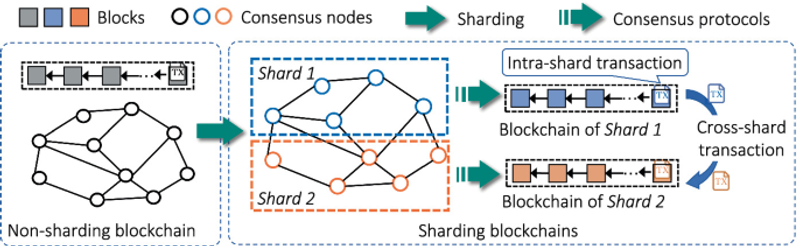
Sharding is one approach used to improve scalability at the base layer. It involves splitting the network into smaller subsets called shards, which process transactions in parallel rather than requiring the entire network to process every transaction.
By distributing the workload across multiple shards, the network can significantly increase its overall transaction throughput. This approach allows Layer-1 blockchains to process more transactions simultaneously and reduce congestion, leading to faster processing times and lower fees.
Security and Decentralization
Security is at the core of Layer-1 blockchains, ensuring that transactions recorded on them are immutable and tamper-resistant. The decentralized structure of these networks means that control is distributed across thousands of independent nodes rather than a single authority, creating a transparent and reliable system. Through consensus mechanisms such as Proof of Work or Proof of Stake, nodes validate transactions and agree on the ledger state. This distributed validation process makes manipulation or coordinated attacks extremely difficult.
Smart Contracts
Smart contracts are a crucial feature of many Layer-1 blockchains, particularly Ethereum. These are self-executing programs deployed on the blockchain, with the terms of the agreement written directly into code. Once predefined conditions are met, the contract automatically executes without requiring intermediaries.
Smart contracts allow decentralized applications (dApps) to operate on blockchain networks and support a wide range of use cases, including token creation (such as ERC-20 tokens), DeFi protocols, and non-fungible tokens (NFTs). By enabling automated and trustless transactions, smart contracts significantly expand the capabilities of Layer-1 networks beyond simple cryptocurrency transfers.
Examples of Layer-1 Blockchains

Bitcoin
Bitcoin (BTC) is the original Layer-1 blockchain and the first implementation of a decentralized digital currency. Introduced in 2009 by the pseudonymous creator Satoshi Nakamoto, the Bitcoin blockchain network was designed to enable peer-to-peer value transfers without relying on a central authority.
Bitcoin uses the Proof of Work (PoW) consensus mechanism, in which miners compete to solve cryptographic puzzles to validate transactions and add new blocks to the blockchain. This system places a strong emphasis on security and decentralization, ensuring that transactions can be verified across a distributed network.
BTC is widely used as a store of value and a digital asset, while also supporting peer-to-peer payments. Many investors view Bitcoin as a hedge against inflation and as a decentralized alternative to traditional financial systems.
To address scalability issues, several Layer-2 solutions have been developed for the Bitcoin network. These solutions improve transaction speed and reduce fees by processing transactions off-chain before settling them on the main blockchain. One popular example is the Lightning Network, which enables faster and cheaper Bitcoin transactions by creating off-chain payment channels between users, significantly reducing the load on the base layer.
Ethereum
Ethereum is one of the most prominent Layer-1 blockchains and introduced the concept of smart contracts, allowing developers to build dApps directly on the blockchain. Through the Ethereum Virtual Machine (EVM), the network supports programmable smart contracts that enable a wide range of use cases, including decentralized finance (DeFi), NFTs, ERC-20 tokens, and other digital assets. Popular tokens such as USDT (Tether) and Chainlink (LINK) operate on Ethereum, leveraging its smart contract infrastructure.
Originally launched with a Proof-of-Work consensus mechanism, Ethereum transitioned to Proof-of-Stake in 2022 to improve energy efficiency and strengthen the network's security model. Transactions and smart contract interactions on Ethereum require gas fees paid in ETH, which compensate validators for processing transactions and securing the network.
To address scalability challenges, Ethereum increasingly relies on Layer-2 rollups that process transactions off-chain before settling them on the Layer-1 blockchain. This approach significantly increases transaction throughput and reduces costs while preserving the security of the main network.
As the largest smart contract ecosystem, Ethereum's Layer-1 network continues to support thousands of decentralized applications, NFTs, and DeFi protocols, expanding the capabilities of blockchain technology beyond simple cryptocurrency transactions.
Solana
Solana is a high-performance Layer-1 blockchain designed to provide fast, secure, and scalable infrastructure for decentralized crypto applications. Bitcoin and Ethereum prioritize security and decentralization, which limits their transaction throughput, while Solana focuses on achieving higher scalability.
The network uses a combination of Proof of History (PoH) and Proof of Stake (PoS) to improve transaction ordering and validation efficiency. This architecture allows Solana to process thousands of transactions per second, making it one of the fastest blockchain networks available today.
One of the main aspects of Solana is its popularity for hosting decentralized applications, particularly those related to NFTs, DeFi, meme coins, and various Web3 projects.
The network’s low transaction fees and high speed make it attractive for developers building applications that require frequent or high-volume transactions. Solana’s combination of scalability, efficiency, and low costs has positioned it as an alternative Layer-1 platform for projects that require faster transaction processing than many earlier blockchain networks.
Avalanche
Avalanche is a Layer-1 blockchain designed to provide high throughput and low transaction costs for decentralized applications and digital assets. The network uses a unique Avalanche consensus mechanism combined with Proof of Stake, allowing transactions to reach finality in seconds. Avalanche also supports customizable blockchain networks known as subnets, which enable developers to launch specialized blockchain environments for different use cases. This architecture makes Avalanche a popular platform for DeFi, enterprise blockchain solutions, and scalable Web3 applications.
TON Blockchain
TON (The Open Network) is an emerging Layer-1 blockchain designed to provide scalable, user-friendly blockchain infrastructure. Originally developed by Telegram, TON aims to support fast transactions and dApps while integrating closely with widely used messaging platforms.
TON uses a Proof-of-Stake consensus mechanism with Byzantine Fault Tolerance to maintain security and network stability. One of its key technical features is its dynamic sharding architecture, which allows the network to split into multiple chains that process transactions in parallel, improving scalability.
A unique aspect of TON is its integration with Telegram, which enables wallet services, mini-apps, tap-to-earn games, and other blockchain features directly within the messaging platform. This close connection to Telegram's large user base has helped position TON as a unique Layer-1 ecosystem compared to traditional blockchains such as Bitcoin or Ethereum.
Layer-1 vs Layer-2 Blockchains
Layer-1 and Layer-2 blockchains address different parts of blockchain scalability. Layer-1 networks form the base infrastructure of a blockchain, while Layer-2 solutions are built on top of these networks to improve transaction speed and reduce costs.
Layer-2 technologies process transactions outside the main blockchain and later settle them on the Layer-1 network. This approach helps reduce congestion and allows blockchain ecosystems to support a larger number of users and applications.
Examples of Layer-2 scaling solutions include Arbitrum, Optimism, Polygon, and the Lightning Network, which help improve transaction throughput while relying on the security of their underlying Layer-1 blockchains.
Key Differences Between Layer-1 and Layer-2
| Feature | Layer-1 Blockchains | Layer-2 Blockchains |
|---|---|---|
| Definition | The base blockchain where transactions are validated and permanently recorded. | Networks built on top of Layer-1 blockchains to improve scalability. |
| Role | Provides security, consensus, and decentralization for the blockchain network. | Improves performance by processing transactions off the base layer. |
| Transaction Processing | Transactions are validated directly on the main blockchain. | Transactions are processed off-chain or in batches and later settled on Layer-1. |
| Scalability | Limited by block size, block time, and consensus mechanisms. | Designed to increase throughput and reduce congestion. |
| Security | Security comes from the network’s consensus mechanism. | Typically inherits security from the underlying Layer-1 network. |
Benefits and Challenges of Layer-1 Blockchains

Benefits
Layer-1 blockchains provide the core infrastructure for blockchain networks, offering a secure and decentralized environment for digital cryptocurrency transactions. These networks support a wide range of blockchain activity, from simple value transfers to complex decentralized applications and digital assets.
Key benefits of Layer-1 blockchains include:
- Decentralized value transfer: L1 blockchains enable users to transfer cryptocurrency and digital assets without relying on central authorities or intermediaries like banks.
- Security and immutability: Transactions recorded on Layer-1 blockchain networks are secured through consensus mechanisms and distributed validation. Once confirmed, transactions become part of an immutable ledger that is extremely difficult to alter.
- Transparency and trustless verification: Public blockchains allow anyone to verify transactions directly on the network, improving transparency and reducing reliance on trusted third parties.
- Foundation for decentralized applications: Many Layer-1 networks support smart contracts, enabling developers to build dApps, DeFi protocols, NFTs, and other blockchain-based services.
- Innovation across the crypto ecosystem: By providing the base infrastructure for blockchain technology, Layer-1 networks enable new financial systems, digital assets, and decentralized services to be built on top of them.
Challenges
Despite their advantages, Layer-1 blockchains face several technical and structural challenges as networks grow and adoption increases.
Key challenges include:
- Scalability limitations: Processing every transaction directly on the base layer can create bottlenecks as the number of users increases. This can lead to network congestion and higher transaction fees.
- The blockchain trilemma: Layer-1 networks must balance decentralization, security, and scalability. Improving one aspect can sometimes weaken another, making it difficult to optimize all three simultaneously.
- Energy consumption in Proof of Work systems: Some Layer-1 blockchains, particularly those using Proof of Work (PoW) such as Bitcoin, require significant computational power to secure the network, leading to high energy consumption.
- Governance and protocol upgrades: Because Layer-1 blockchains are decentralized, implementing protocol changes often requires broad agreement among developers, validators, and the community. Disagreements can delay upgrades or lead to network forks.
- Validator or mining centralization risks: Although designed to be decentralized, mining power or validator participation can become concentrated among a small number of entities, potentially reducing overall decentralization.
- Security threats and potential attacks: Layer-1 networks must defend against risks, including 51% attacks, validator manipulation, and other network vulnerabilities. Maintaining strong security requires a large decentralized network of participants.
To address these challenges, many Layer-1 networks are exploring various approaches, including Layer-2 scaling solutions, improved consensus mechanisms, and protocol upgrades designed to increase scalability while maintaining decentralization and security.
To Conclude
Layer-1 blockchains form the backbone of the blockchain ecosystem, providing
From Bitcoin to Ethereum and other emerging networks, Layer-1 blockchains continue to play a central role in the development of blockchain technology. They provide the foundation for decentralized finance, smart contracts, and a growing range of digital assets and applications across the cryptocurrency ecosystem.
Understanding how Layer-1 blockchains operate helps investors and users evaluate blockchain networks and the technologies built on top of them more effectively.