What is Crypto Staking?
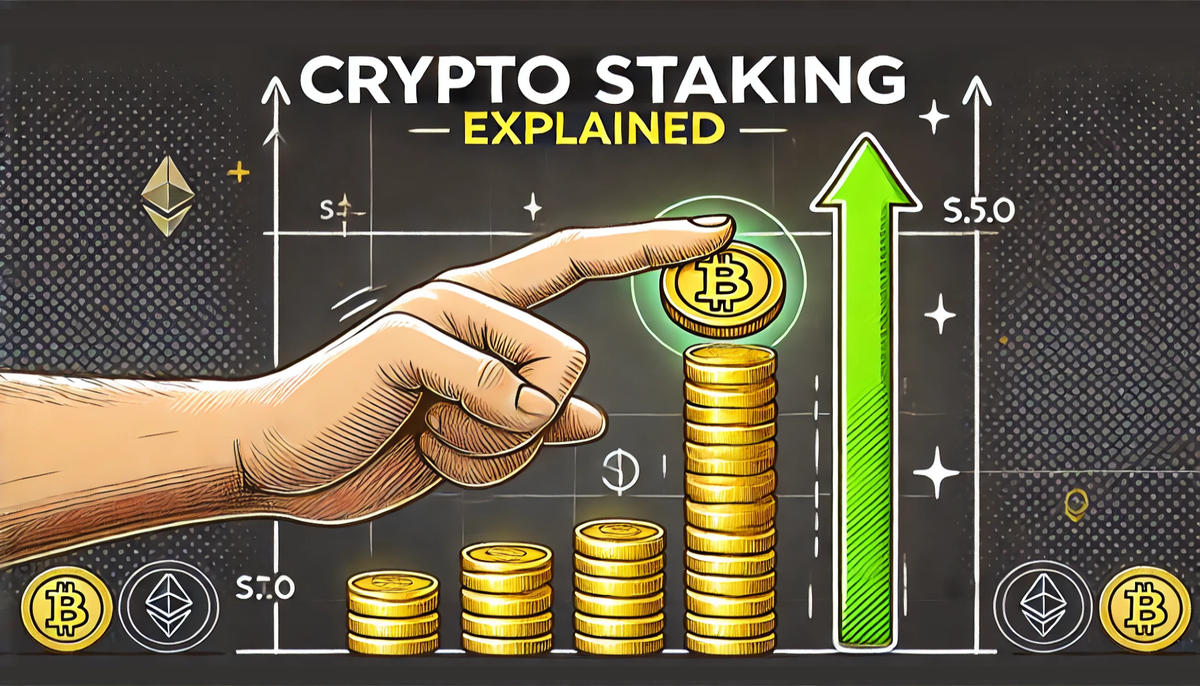
Crypto staking is a process that allows cryptocurrency holders to earn crypto rewards by participating in blockchain networks. It is a key feature of Proof-of-Stake (PoS) blockchains, where users lock up their tokens to support the network's operations, such as validating transactions and securing the system. This activity not only provides passive income opportunities but also strengthens the blockchain.
For many, crypto staking offers a way to actively engage with blockchain networks without requiring technical expertise or a significant upfront investment. It provides a more sustainable alternative to traditional mining methods while contributing to the overall health of decentralized systems.
How Does Crypto Staking Work
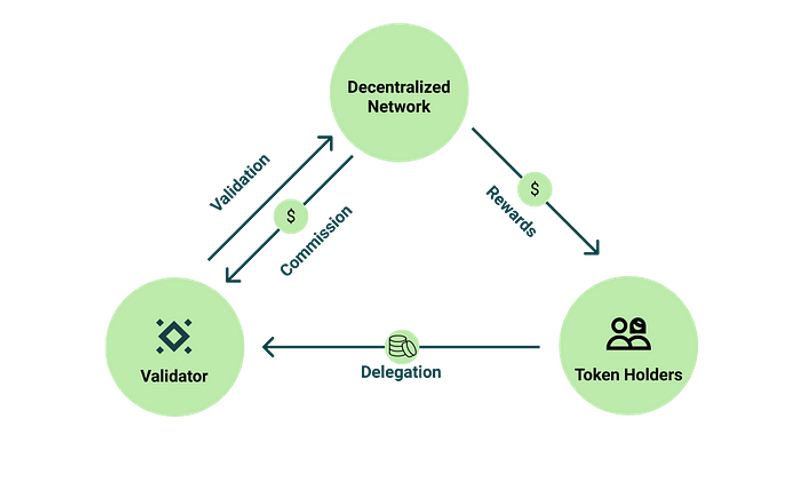
To engage in crypto staking means delegating cryptocurrency to a validator node in a Proof-of-Stake (PoS) blockchain. Validators are responsible for confirming transactions and maintaining the integrity of the blockchain, whether operating on blockchain layer-1 networks, such as Ethereum or Solana, or blockchain layer-2 solutions designed to enhance scalability. In return for their work, validators earn staking rewards that are shared with the token holders who have staked their assets. The reward amount depends on the number of tokens staked, the duration of staking, and the validator's performance.

Ethereum, for example, requires each validator to stake at least 32 cryptocurrency tokens to participate in securing the network. This ensures that only those with significant holdings and commitment can operate validator nodes.
Unlike mining in Proof-of-Work (PoW) blockchains, crypto staking doesn’t require expensive hardware or high electricity consumption. This makes crypto staking an accessible and eco-friendly option for users looking to contribute to blockchain networks and earn staking rewards. Many blockchains offer participants an effective annual yield (APY) to incentivize token holders.
Popular cryptocurrency wallets, such as Ledger Live and Trust Wallet, simplify the staking process for users. Ledger Live prioritizes security for long-term holders, especially when paired with a Ledger hardware wallet. Trust Wallet, on the other hand, enables seamless staking across a wide range of tokens, all through a user-friendly mobile interface.
Benefits of Crypto Staking
Generate Passive Income
Crypto staking allows cryptocurrency holders to earn staking rewards simply by locking up their tokens. For long-term investors, this provides a reliable source of passive income while maintaining ownership of their digital assets.
Support Network Decentralization
By participating in crypto staking, users contribute to the security and decentralization of blockchain networks. This ensures the system remains stable and trustworthy. Some blockchains, such as those utilizing Delegated-Proof-of-Stake (DPoS) mechanisms, enable token holders to vote for validators, thereby making the process more community-driven.
Incentives for Early Participation
Many PoS blockchains reward early adopters with higher staking rewards or increased effective annual yield (APY). This provides an additional motivation for users to engage in crypto staking on new and emerging networks.
Risks Involved in Crypto Staking
Validator-Related Risks
One of the primary risks associated with crypto staking is linked to the validator's performance. Poor or malicious behavior by a validator can result in penalties or slashing, leading to a loss of staked funds. For example, in October 2023, Launchnodes, a validator operator for the Lido protocol, experienced a slashing incident due to configuration errors, resulting in penalties and reduced rewards for stakers. Incidents like these underscore the importance of selecting reliable validators with a proven track record and a minimal history of slashing.
Market Volatility
Since staked tokens are often locked for a set period, users may face challenges during market downturns or miss opportunities to sell during price surges. For example, holders of popular tokens like Bitcoin, which don’t use crypto staking, might find greater liquidity than those participating in staking systems.
Variable Rewards
Staking rewards in cryptocurrency are influenced by factors such as network activity, inflation rates, and the total amount of staked tokens. These variations depend on how the staking protocol is designed, which can add unpredictability to potential earnings.
How to Start Staking Cryptocurrency
To start crypto staking, users typically need to follow these steps:
- Choose a cryptocurrency that supports crypto staking. Popular options include Ethereum 2.0, Cardano (ADA), Solana (SOL), and Polkadot (DOT).
- Set up a reliable crypto wallet capable of holding stakeable tokens.
- Ensure that the wallet is compatible with the chosen network.
- Select a reliable staking method, such as using a staking wallet, joining a staking pool, or staking through an exchange.
- Monitor rewards and performance periodically to optimize staking results.
Staking in Crypto Presales, IDOs, and Early-Stage Projects
What is Staking in Presales and IDOs?
Crypto staking in crypto presales and Initial Decentralized Offerings (IDOs) is a mechanism that is used by early-stage projects to incentivize token holders and build a loyal community post-launch. Unlike blockchain staking, which secures and operates a blockchain network, presale or IDO staking focuses on driving token stability, rewarding long-term holding, and fostering ecosystem growth.
Here’s how it typically works:
- Token Lockups: Crypto Investors who purchase digital tokens during presales or IDOs can stake them in dedicated staking pools designed on Proof-of-Stake frameworks. These pools reward holders with additional tokens, governance privileges, or other incentives, reinforcing their involvement in the ecosystem.
- Liquidity Building: Some crypto projects, particularly in Decentralized Finance (DeFi), use staking to enhance liquidity by offering rewards to users who contribute tokens to liquidity pools on decentralized exchanges (DEXs).
- Community Incentives: Staking programs often include bonuses or higher yields for early participants, encouraging users to stay engaged with the crypto project during its critical growth phase.
Example: SushiSwap, a decentralized exchange built on the Ethereum blockchain. Instead of conducting an ICO, SushiSwap incentivized liquidity providers by allowing them to stake their LP tokens on the platform, earning rewards in the form of SUSHI tokens.
Benefits of Staking in Presales and IDOs
- Reduces token sell pressure post-launch.
- Encourages long-term commitment from early investors.
- It provides additional rewards in addition to token appreciation.
- Helping stabilize the token’s price and build liquidity.
Other Staking Opportunities Beyond Presales and IDOs
Staking in DeFi Protocols
DeFi platforms on layer-1 blockchains, such as Ethereum, and layer-2 scaling solutions, like Polygon, frequently offer crypto staking options to secure their ecosystems. These protocols enable users to stake governance tokens, stablecoins, or liquidity provider (LP) tokens and earn rewards in return. These rewards often come from transaction fees, yield farming, or protocol incentives.
Example: Aave, a decentralized lending platform on Ethereum, allows users to stake their $AAVE governance tokens in the Safety Module. This provides staking rewards and helps protect the protocol against shortfall events.
Staking in NFT Platforms
Some NFT marketplaces and ecosystems have introduced crypto staking for their native tokens. With staking, users can earn rewards, including exclusive NFTs, reduced marketplace fees, or governance rights.
Example: Binance NFT offers staking for certain NFTs, allowing users to earn rewards like ApeCoin (APE) by staking Bored Ape Yacht Club (BAYC) and Mutant Ape Yacht Club (MAYC) NFTs.

Community-Driven Token Staking
Many community-centric tokens, including meme coins and utility tokens, offer crypto staking programs to keep holders engaged and incentivize them to participate. These programs often focus on rewarding loyal users and increasing token utility.
Example: Shiba Inu (SHIB), one of the most well-known meme coins, offers a staking program through its ShibaSwap decentralized exchange. Holders can stake SHIB tokens, referred to as "burying" within the ecosystem, and earn rewards in the form of BONE and other ecosystem tokens.
Ecosystem Incentives and Hybrid Models
Crypto projects sometimes combine crypto staking with other activities, such as gaming or yield farming. Play-to-earn games and metaverse platforms often incorporate staking into their models to reward active users and token holders. These systems frequently leverage layer-1 protocols or layer-2 solutions to ensure scalability and efficiency.
Example: The Sandbox, a decentralized virtual gaming world, allows players to stake its native cryptocurrency, $SAND, to earn rewards and access exclusive content. By staking $SAND, users can participate in governance decisions, purchase virtual land, and enhance their gaming experience within the metaverse.