During the late 2010s, blockchain networks like Bitcoin and Ethereum helped popularize cryptocurrencies and decentralized applications. However, as adoption grew, many networks struggled with slow transaction speeds, network congestion, and rising fees, making them difficult to scale for everyday use.
Solana was created to address those limitations. Founded in 2017 by former Qualcomm engineer Anatoly Yakovenko, the project was designed to support fast, low-cost transactions without relying on Layer-2 networks. After launching its mainnet beta in 2020, Solana quickly became one of the largest Layer-1 blockchains, attracting developers building a wide range of blockchain applications.
Today, Solana is one of the world's most widely used blockchain networks, with millions of users and a growing ecosystem of decentralized applications powered by its native cryptocurrency, SOL.
What Is Solana?
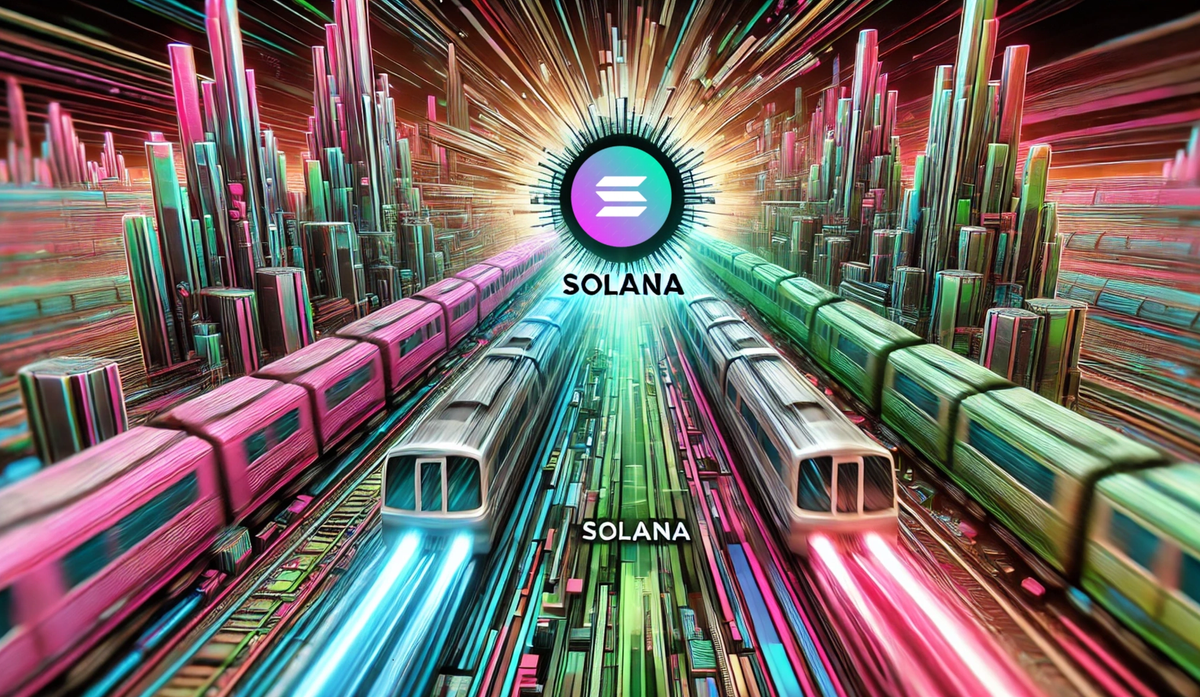
Solana is a Layer-1 blockchain designed to run smart contracts, decentralized applications (dApps), and digital assets on a single high-capacity network. It is best known for its fast transaction processing, low fees, and expanding ecosystem of trading platforms, payment applications, games, digital collectibles, and other blockchain-based services.
While many blockchain networks rely on additional scaling solutions to increase capacity, Solana processes transactions on a single blockchain using a combination of Proof of Stake (PoS) and Proof of History (PoH). This design allows the network to handle a high volume of activity while keeping transaction costs low.
The network's native cryptocurrency, SOL, is used to pay transaction fees, stake with validators to help secure the network, and interact with applications built on Solana. Today, Solana is used for a wide range of blockchain applications, from payments and trading to gaming and digital assets.
Who Created Solana?
Solana was founded by Anatoly Yakovenko, a software engineer who previously worked at Qualcomm. In 2017, Yakovenko proposed using a cryptographic timestamping system called Proof of History to help blockchain networks process transactions more efficiently without sacrificing security.
To develop the project, Yakovenko was joined by former Qualcomm colleagues Greg Fitzgerald and Stephen Akridge, along with entrepreneur Raj Gokal, who helped establish the business side of the project. Together, they built the blockchain that would later become Solana.
The Solana testnet launched in 2018, giving developers an early environment to experiment with the network before its public release. Solana's Mainnet Beta went live in March 2020, marking the start of the blockchain's public operation. Since then, the ecosystem has expanded to include thousands of applications, developers, validators, and infrastructure providers.
Today, Solana's development is supported by a broader community rather than a single organization. Solana Labs contributes software development and engineering, while the Solana Foundation, a nonprofit organization based in Switzerland, supports ecosystem growth through funding, grants, education, and community initiatives. Independent validators around the world operate the network, helping secure the blockchain and process transactions.
How Does Solana Work?
Like other blockchain networks, Solana records transactions on a decentralized digital ledger maintained by a network of independent validators rather than a central authority. Whenever someone sends SOL, trades a token, or interacts with a dApp, validators verify the transaction before it is added to the blockchain.
Solana was designed to process transactions quickly while keeping fees low. It combines several technologies to process and verify transactions efficiently while allowing many transactions to be handled simultaneously.
While traditional payment systems rely on banks or payment processors, Solana enables users to send assets and interact with blockchain applications directly from their crypto wallets.
What Is Proof of History?
Proof of History is a cryptographic system that helps Solana record the order of transactions before they are confirmed by the network. Rather than asking validators to constantly communicate about when each transaction occurred, PoH creates a verifiable timeline that allows them to process transactions more efficiently.
PoH is not a consensus mechanism on its own. Instead, it works alongside Solana's proof-of-stake system by providing a shared record of time and transaction order. This reduces the amount of communication required between validators and helps the network confirm transactions more quickly.
What Is Proof of Stake?
Proof of Stake is the consensus mechanism that secures the Solana blockchain. Instead of relying on energy-intensive mining, Solana uses a network of validators that stake SOL tokens to verify transactions and add new blocks to the blockchain.
Anyone can operate a validator if they meet the network's technical requirements, while SOL holders who do not run their own validator can delegate their tokens to one. In return, validators and delegators may earn staking rewards, although rewards are not guaranteed and can vary over time.
Why Is Solana Fast?
Solana's speed comes from the way its technologies work together. Proof of History reduces the communication required between validators, Proof of Stake secures the network efficiently, and parallel transaction processing allows multiple transactions to be executed at the same time when they don't compete for the same resources.
These design choices enable Solana to process significantly more transactions than many earlier blockchain networks. Most transactions cost only a fraction of a cent, although fees can increase during periods of high network activity.
What Is SOL?
SOL is the native cryptocurrency of the Solana blockchain. It is used to pay transaction fees, stake with validators to help secure the network, and interact with dApps built on Solana.
Anyone using the Solana network needs a small amount of SOL to cover transaction fees, whether they are transferring tokens, trading on a decentralized exchange, or using other blockchain applications. SOL holders can also delegate their tokens to validators to help secure the network and potentially earn staking rewards.
In addition to its role within the network, SOL is one of the largest cryptocurrencies by market capitalization and is widely traded on cryptocurrency exchanges around the world.
Why Is Solana Popular for Meme Coins?
Solana has become one of the leading blockchains for launching and trading meme coins. The network's active decentralized exchange ecosystem and token-launch platforms have made it easier for developers to create new tokens and for traders to access them.
Platforms such as Pump.fun significantly lowered the technical barriers to creating new tokens, helping drive a surge in meme coin launches and trading activity on Solana. Studies have found that tokens created through Pump.fun accounted for a substantial share of token creation and decentralized exchange activity on the network during the 2024–2025 meme coin boom.
Well-known Solana-based meme coins include BONK and Dogwifhat (WIF), both of which helped attract new users and trading activity to the ecosystem.
How Much Are Solana Transaction Fees?
Solana is known for its low transaction fees compared with many other blockchain networks. A standard transaction typically costs only a fraction of a cent, making the network well-suited for a wide range of use cases and sectors.
Every Solana transaction includes a base fee, which is paid in SOL. During periods of high network activity, users can also choose to pay an optional priority fee to increase the likelihood that their transaction is processed more quickly. Most everyday transactions do not require a priority fee, but it can be useful during events such as popular token launches or periods of network congestion.
Although Solana fees are generally low, the exact cost can vary depending on factors such as network demand, the complexity of the transaction, and the market price of SOL. Even so, transaction fees on Solana typically remain significantly lower than those on many other smart contract blockchains.
Solana vs. Ethereum
Solana and Ethereum are both leading smart contract blockchains that support dApps, digital assets, and smart contracts. However, they use different approaches to scalability and transaction processing.
Solana processes transactions on a single high-capacity Layer-1 blockchain using Proof of Stake, Proof of History, and parallel transaction processing. Ethereum also uses Proof of Stake but relies heavily on Layer-2 networks to increase capacity and reduce transaction costs.
In general, Solana offers faster transaction processing and lower network fees, while Ethereum has a larger and more established developer ecosystem. The choice between the two often depends on an application's requirements, including performance, costs, and compatibility with the Ethereum ecosystem.
| Feature | Solana | Ethereum |
|---|---|---|
| Blockchain type | Layer-1 | Layer-1 |
| Consensus | Proof of Stake with Proof of History | Proof of Stake |
| Scaling | High-capacity Layer-1 | Layer-2 networks |
| Transaction fees | Usually a fraction of a cent | Vary by network and Layer 2 |
| Ecosystem | Large and growing | Larger and more established |
Advantages and Disadvantages of Solana
Like any blockchain, Solana has strengths and trade-offs. Its high-performance design has made it one of the most widely used smart contract platforms, but it also faces technical and operational challenges.
Advantages
- Fast transaction processing: Solana can process a high volume of transactions with short confirmation times.
- Low transaction fees: Most transactions cost only a fraction of a cent, making the network suitable for frequent on-chain activity.
- Scalable architecture: Solana combines Proof of Stake, Proof of History, and parallel transaction processing to support high network throughput.
- Large application ecosystem: Solana supports applications across DeFi, payments, stablecoins, tokenized assets, gaming, NFTs, decentralized infrastructure, and consumer services.
- Energy efficient: Because it uses Proof of Stake rather than Proof of Work, Solana consumes significantly less energy than mining-based blockchains.
Disadvantages
- Past network outages: Solana has experienced several outages and periods of degraded performance, although network reliability has improved in recent years.
- High hardware requirements: Running a validator requires more powerful hardware than many other blockchain networks, which some critics argue may affect decentralization.
- Network congestion: During periods of heavy demand, some transactions may fail or require priority fees to be processed more quickly.
- Strong competition: Solana competes with established smart contract platforms such as Ethereum and newer Layer-1 blockchains for developers and users.
- Decentralization concerns: Solana’s hardware demands, dependence on professional infrastructure providers, and concentration of stake among larger validators have led to ongoing debate about how decentralized the network is.
Frequently Asked Questions (FAQs)
Yes. Solana is a Layer-1 blockchain, meaning transactions are processed and recorded directly on its own network rather than on a separate Layer-2 scaling solution. It supports smart contracts, dApps, and digital assets.
SOL is Solana's native cryptocurrency. It is used to pay transaction fees, stake with validators to help secure the network, and interact with applications built on the Solana blockchain.
In general, Solana processes transactions faster and typically offers lower network fees than Ethereum. However, Ethereum has a larger and more established ecosystem and relies heavily on Layer-2 networks to improve scalability.
Yes. SOL holders can stake their tokens by delegating them to a validator. In return, they may earn staking rewards while helping secure the Solana network.
Yes. Solana has experienced several network outages and periods of degraded performance since its launch. While reliability has improved over time through software upgrades and infrastructure improvements, occasional congestion and technical issues can still occur.