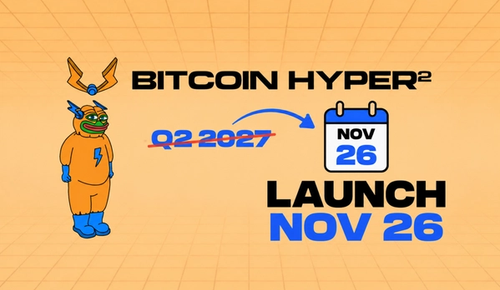
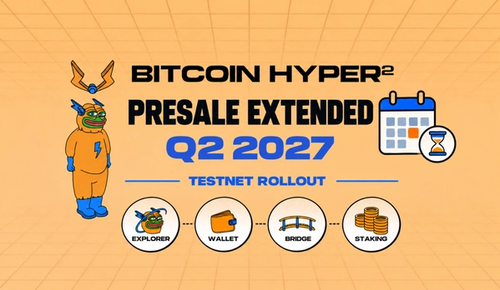
Bitcoin Hyper presale (HYPER) is a crypto project that aspires to build a Layer-2 blockchain for Bitcoin, designed to support high throughput and smart contracts within the Bitcoin ecosystem.
It features a meme-style mascot in the form of a frog in an orange suit with lightning bolt symbols on its ears and chest, drawing on visual trends common in meme coin branding. Its main concept is to enable fast, low-fee Bitcoin transactions and on-chain applications by anchoring a Solana-like chain to Bitcoin’s base layer.
Over the past year, crypto presales focused on building Layer-2 networks have gained traction. Projects like Pepe Unchained, which raised $73 million for an Ethereum Layer-2, Solaxy, which raised $55 million for a Solana-based L2, and Bitcoin Pepe, which raised over $15 million for a Bitcoin Layer-2, demonstrate that the power of this narrative lies in its ability to attract retail investors.
Bitcoin Hyper has already raised over $30 million, placing it among the largest active presales in this category. Yet, despite publishing “Development Updates” claiming that a devnet is live and that SVM programs are running natively, there is still no independently verifiable public testnet, open-source repository, or third-party confirmation of these claims.
In this review, we aim to determine whether Bitcoin Hyper is truly legitimate and has the potential to build a next-generation Bitcoin Layer 2 network, or whether concerns about aggressive marketing and a potential crypto presale scam are justified.
Want to see how similar crypto presales performed after listing? Check out our crypto presales price tracker.
Bitcoin Hyper Whitepaper Analysis: Structure, Value, and Missing Details
The 17-page whitepaper resembles those of other meme coin Layer-2 blockchain projects. While it’s longer than most, it still comes with large fonts, graphics, and filler content.
The document gives the impression that only minimal technical thought has been invested in the design of the Bitcoin Hyper Layer-2. It claims the Layer-2 will use the Solana Virtual Machine (SVM) for smart contracts and implement zero-knowledge proofs to anchor state commitments to Bitcoin.
Still, this is not enough. A serious whitepaper should include much more, such as technical architecture, potential partnerships, and a comparison with competitors.

Although the whitepaper adheres to some MiCAR-style formatting and includes a 14-day withdrawal disclaimer for retail investors, it omits several important details, including how the presale funding will be used, the token vesting schedule, the team’s compensation structure, and other key operational information typically expected by crypto investors.
It lists a company registered in the British Virgin Islands, Sentinum Ltd. It includes a disclaimer noting it is not approved by any EU authority and does not constitute a financial prospectus. Still, it fails to provide meaningful disclosure of the team’s or directors’ real identities behind the project.
Anonymous Team Raises Concerns and Possible Ties to Known Entities
The team behind this crypto project has chosen to remain anonymous. They haven't gone through any KYC process, and we can only speculate about their identities.
While reviewing the whitepaper, we noticed similarities in the corporate setup compared to projects such as Wall Street Pepe, Best Wallet, and Solaxy, including the use of offshore shell companies (in most cases), similar disclaimers, and language aimed at appearing MiCA-compliant. Both projects were previously investigated and were allegedly linked to the Finixio Network.
Additionally, it’s evident from the marketing content and the websites where it’s promoted that Bitcoin Hyper is backed by Clickout Media, including at least one sponsored article that explicitly states, “Written by Clickout Media.”

All of this suggests, in our opinion, that Bitcoin Hyper is highly likely to be another Finixio-backed project.
Given that, the lack of transparency around the team is not just a red flag; it fits a pattern seen in other crypto presales that were later exposed as scams or turned out to be highly manipulative. In several of those cases, anonymous teams launched aggressive marketing campaigns, raised significant funds, and left investors with no clear accountability when project promises were not delivered. Bitcoin Hyper shows several of the same warning signs.
Regulatory Warning: CNMV Flags Bitcoin Hyper as Unregistered (January 2026)
On January 19, 2026, Spain’s financial regulator, the Comisión Nacional del Mercado de Valores (CNMV), issued a public warning regarding Bitcoin Hyper.
The CNMV categorized the entity behind Bitcoin Hyper as an unregistered firm not authorized to provide investment services in Spain. The regulator listed specific identifying details, including associated domains used to promote the HYPER token.
While regulatory warnings do not automatically determine whether a project is fraudulent, they are serious signals. A warning from a national financial authority indicates that the project is operating without proper authorization within that jurisdiction.
For a presale that has reportedly raised over $30 million and is publicly flagged by a European regulator, this materially changes the risk profile. Investors should independently verify the CNMV notice and review the listed identifiers.
Bitcoin Hyper Tokenomics: Inflated FDV and Hidden Presale Token Allocation
According to the tokenomics, the total supply of the HYPER token is 21 billion. The breakdown is listed as follows: 25% Treasury, 20% Marketing, 15% Rewards, 10% Listings, and 30% Development.
But one key part of the pie is missing — the presale tokens.
It’s unclear why this allocation isn’t mentioned directly. According to a Telegram admin, the presale tokens are taken from the Development pool. But how many tokens, exactly, are allocated for the HYPER presale? Why isn’t this stated explicitly? Is there an interest in keeping the information vague?
That omission is likely not random; by keeping the presale allocation undefined, the team can adjust it freely and sell as many tokens as possible to maximize profit without committing to any specific limit. Either way, this is the kind of information that should be disclosed clearly.

Bitcoin Hyper is a new crypto project with an anonymous team, no product, no MVP, and no public record of experience or success.
So, how much should the market cap, or fully diluted value (FDV), be for a project at this stage? According to the team, the HYPER token is worth over $287 million (based on a total supply of 21B and the presale price of $0.0136762 at the time of writing).
In our opinion, this valuation is significantly inflated for a presale-stage project. It's unlikely the broader crypto market will assign such a high valuation even after launch. That figure is higher than many projects with working products, real users, and proven revenue. A more realistic token valuation for a presale-stage project would be in the range of $10 million to $ 30 million.
By pricing the token valuation at around $287 million, with no working product or transparent allocation, Bitcoin Hyper is effectively preying on inexperienced retail investors who overlook these details.
The team is raising funds at a level that, in our view, is almost certain to collapse once trading begins, a setup that makes the project’s conduct indistinguishable from a scam.
HYPER Token Staking Yields: Unrealistic APYs or Investor Incentive?
Bitcoin Hyper's staking mechanism offers high APYs to crypto investors who stake their tokens. The earlier you buy and stake, the higher the potential yield. For example, those who staked during the first days of the HYPER presale could earn up to 5,000% APY. At the time of writing, and after $1.4 million raised, the staking reward stands at 553%.

These high yields are clearly designed to make the presale more attractive, but they’re not sustainable and don’t reflect a long-term plan for a healthy token economy. Similar crypto projects that offered unrealistic returns in the past have often failed, as the model tends to attract short-term speculation and leads to massive sell pressure once rewards are unlocked.
Bitcoin Hyper Smart Contract Audit and Security Concerns
Bitcoin Hyper underwent two smart contract audits, one by Coinsult and another by Spywolf. However, it’s important to note that these audits only cover the basic token functionality, not the more complex Layer-2 blockchain that the project claims to be building.
These appear to be entry-level audits, which may be enough for a basic token contract but offer no insight into the much more complex Layer-2 blockchain the project claims to be developing.
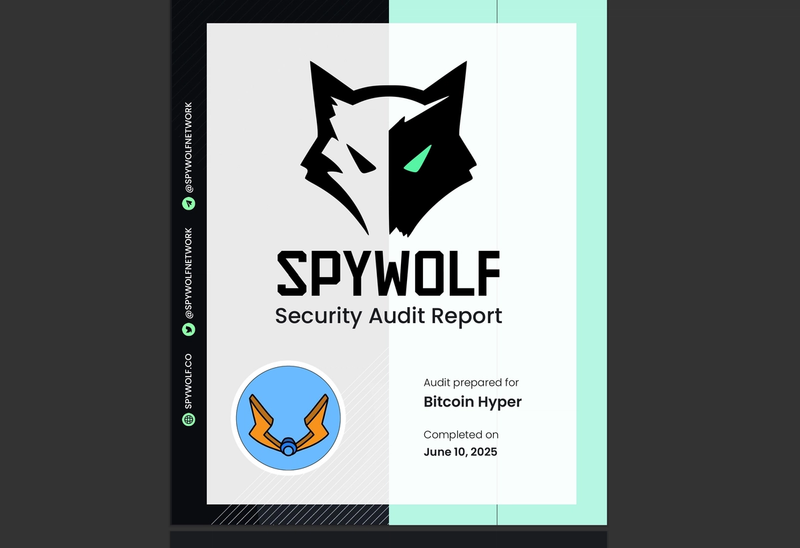
For crypto presales raising tens of millions of dollars, it’s more likely that any attempt to mislead investors would occur through less visible means. There’s no indication that an audit of the Layer-2 has been conducted or will be made public, which raises further concerns.
There is still no publicly accessible, independently verified testnet explorer or open-source repository that allows external verification of the claimed devnet activity. Nearly a year after the presale began, the technical updates remain published statements rather than externally auditable infrastructure.
HYPER Token Marketing Strategy: Sponsored Hype vs. Real Assets
The project's marketing campaign is aggressive, to put it mildly. Countless sponsored articles and press releases on crypto media outlets such as CryptoNews, Yahoo Finance, Bitcoinist, and other syndication platforms promote the HYPER token to generate presale interest.
Bitcoin Hyper is also being pushed through crypto influencers and X (formerly Twitter) posts, suggesting a broad but shallow marketing approach.
When there's no product, no MVP, and no clear roadmap, and the team is anonymous, marketing becomes the primary tool for attracting investors. But when comparing the volume of promotion to the actual deliverables, the imbalance is hard to ignore.
Bitcoin Hyper currently relies heavily on paid exposure rather than demonstrable progress. This raises questions about the sustainability of interest once the marketing budget is depleted or sentiment shifts.
The vast majority of media coverage has come through paid placements. To date, no independent media outlet has reviewed the project based on its product quality or technical milestones.
Reputation Snapshot: Public Feedback and Platform Warnings
As of early 2026, Bitcoin Hyper’s public reputation is negative.
On Trustpilot, the project currently has a low rating of 1.8 based on 18 reviews. Several users report dissatisfaction with the presale structure, the disappearance of assets, or marketing practices.

In addition, various online crypto forums contain allegations ranging from aggressive marketing tactics to concerns about wallet interaction prompts. These are user-generated claims and have not been independently verified, but they contribute to the project’s overall risk perception.
While online reviews do not conclusively determine legitimacy, consistent patterns of negative feedback are a factor investors should consider.
Bitcoin Hyper Price Prediction: Risk of Sharp Decline After Token Launch
Based on the performance of similar marketing-driven crypto presales, our Bitcoin Hyper price prediction is that the HYPER token may drop by 50%–95% within the first year. Many comparable tokens have followed a similar pattern: aggressive presale marketing, brief hype, and a rapid price decline as early investors exit.
Flattering price forecasts published on sponsored news platforms should not be taken at face value. These are typically promotional and lack real technical analysis or grounding in project fundamentals. In reality, most crypto investors who buy into these presales do not see a profit.
For those still interested in Bitcoin Hyper, a more cautious approach may be to wait for the token launch and assess the trading price, liquidity, and any real updates before making a decision.
Our Take on Bitcoin Hyper: Scam or Legit?
Bitcoin Hyper is an anonymous crypto presale that claims to build a Layer-2 blockchain on Bitcoin using Solana technology. While the concept of scaling Bitcoin through fast smart contracts and bridging is appealing, the project currently offers no working product, no open-source code, and no visible team.
The HYPER token’s presale valuation is far too high for a project at this early stage, and the absence of clear presale token allocation, combined with unrealistic staking rewards, raises red flags. Such pricing creates a disconnect between the project’s stage of development and its claimed value. In our opinion, a crypto presale selling tokens at this inflated FDV cannot be considered legitimate.
Additionally, aggressively paid marketing through crypto influencers, media outlets, and social media threads may generate short-term buzz, but without a solid foundation, it is unlikely to create long-term value.
Even if Bitcoin Hyper eventually delivers some form of technical product, the anonymous team, high valuation, and lack of transparency make it, in our opinion, a high-risk, low-conviction opportunity to consider legit.
In light of all this, the Bitcoin Hyper crypto presale should be approached with extreme caution. While it may technically deliver on its promise, the combination of red flags, overvaluation, and opacity significantly reduces its likelihood of long-term success.