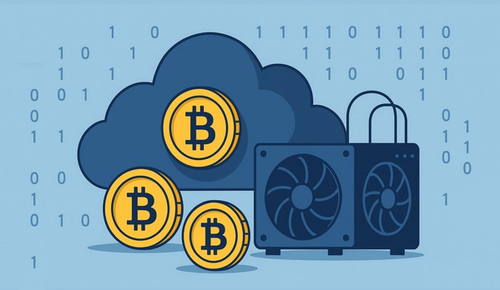
Building and maintaining infrastructure has traditionally required companies or governments with enough capital to deploy equipment, operate networks, and cover maintenance costs. Wireless coverage, data storage, computing, mapping, and energy systems have therefore remained largely controlled by centralized operators.
Decentralized Physical Infrastructure Networks (DePIN) offer a decentralized approach to funding, deploying, and expanding physical infrastructure. They allow independent participants to contribute hardware, capacity, or real-world data to a shared network and receive compensation when their resources provide useful services.
DePIN is a blockchain-based model that uses token incentives to encourage individuals and businesses to deploy and operate real-world infrastructure. Rather than a company purchasing, owning, and managing every piece of equipment itself, a DePIN network coordinates independently owned hardware through blockchain technology, allowing contributors to earn rewards for providing verifiable services.
A typical DePIN network includes four main components:
A DePIN network combines physical infrastructure with blockchain technology to coordinate contributors, verify services, and distribute rewards. While implementations differ, most DePIN networks share the following architecture.
The physical layer consists of the hardware contributed by network participants. Depending on the project, this may include wireless hotspots, storage servers, GPUs, dashcams, sensors, battery systems, or other connected devices that provide real-world services.
The blockchain acts as the network's coordination and settlement layer. Smart contracts register compatible devices, record verified activity on-chain, distribute rewards, and execute protocol rules without relying on a central operator. Many DePIN projects are built on Layer-1 blockchains such as Solana or Ethereum, while others use Layer-2 networks or rollups to reduce transaction costs and improve scalability.
Before contributors are rewarded, the network must verify that useful services were actually provided. Verification methods vary by project and may measure storage proofs, network coverage, computing performance, uptime, data quality, geographic location, or other protocol-specific metrics. This prevents fraudulent claims and ensures rewards reflect real contributions.
Once contributions are verified, the protocol rewards infrastructure providers according to its tokenomics. Rewards are typically paid in the network's native token, although some projects also support stablecoins, credits, or other payment models. The amount each provider receives usually depends on factors such as the quantity and quality of services delivered, network demand, and the protocol's reward mechanism.
DePIN projects are generally divided into two categories: Physical Resource Networks (PRNs) and Digital Resource Networks (DRNs). The distinction depends on the type of infrastructure being provided and whether the physical location of that infrastructure affects the service.
Physical Resource Networks (PRNs) rely on location-dependent infrastructure to deliver real-world services. Participants deploy physical devices that provide resources such as wireless coverage, mapping data, environmental monitoring, or energy generation and distribution. Because these services depend on where the infrastructure is installed, expanding the network requires contributors to deploy hardware in areas where demand exists.
Examples of PRNs include decentralized wireless networks like Helium, mapping networks like Hivemapper, and projects focused on sensors, mobility, or energy infrastructure.
Digital Resource Networks (DRNs) provide digital resources through distributed hardware. Instead of delivering location-dependent services, they supply computing power, data storage, bandwidth, or other digital infrastructure that users can access remotely. While performance factors such as latency may matter for some applications, the physical location of the hardware is generally less important than the availability, reliability, and quality of the service.
Examples of DRNs include decentralized storage networks like Filecoin and Storj, as well as decentralized compute platforms such as Akash Network, Render, and Aethir.
| Feature | Physical Resource Networks (PRNs) | Digital Resource Networks (DRNs) |
|---|---|---|
| Primary resource | Physical infrastructure and real-world services | Digital infrastructure and computing resources |
| Location dependency | High | Low |
| Common hardware | Hotspots, sensors, dashcams, batteries | Storage servers, CPUs, GPUs |
| Typical use cases | Wireless networks, mapping, energy, mobility | Storage, cloud computing, AI, rendering |
DePIN networks support a wide range of real-world services by allowing independent participants to provide infrastructure that businesses and individuals can access on demand. While new applications continue to emerge, the following sectors represent the most established use cases.
Storage DePINs create distributed marketplaces where participants provide storage capacity to users who need secure and reliable data storage. Instead of relying on a single provider, files can be distributed across multiple storage providers, improving redundancy and reducing single points of failure.
A well-known example is Filecoin, which connects customers that need storage with providers that supply disk capacity. Storage providers submit cryptographic proofs to show that they have stored the data and continue to keep it available for the agreed period.
Wireless DePINs allow participants to deploy network equipment that provides coverage for connected devices and mobile users. Contributors can earn rewards for supplying eligible wireless coverage or carrying network traffic, while customers and developers use the resulting connectivity.
A leading example is Helium, which relies on independently operated hotspots to provide LoRaWAN coverage for IoT devices and Wi-Fi-based mobile data offload. Hotspot operators receive rewards based on network-specific measures such as coverage and data transfer.
Compute DePINs combine distributed CPU and GPU capacity for workloads such as AI inference, model training, graphics rendering, and general cloud computing. Customers can access resources supplied by independent providers rather than relying entirely on centralized cloud platforms.
One example is Render Network, which connects GPU providers with creators and developers that need computing capacity for rendering and AI-related workloads. Akash Network uses a marketplace model in which infrastructure providers offer computing resources and customers select available capacity based on factors such as price and technical requirements.
Mapping DePINs collect geospatial information through community-operated devices such as dashcams and sensors. The submitted data is checked for factors such as location, freshness, quality, and duplication before it is incorporated into maps or sold through data products.
A prominent example is Hivemapper, where contributors use compatible dashcams to collect street-level imagery. The network processes these submissions into map data, while contributors receive HONEY rewards based on eligible mapping activity and data quality.
Mobility DePINs allow vehicle owners to contribute data generated by connected cars, including information about location, mileage, diagnostics, and vehicle performance. Applications can use this data for services such as maintenance, insurance, fleet management, and mobility analytics, subject to the permissions granted by the vehicle owner.
An example is DIMO, which allows drivers to connect their vehicles and share selected data with compatible applications. Drivers can receive rewards for eligible contributions while retaining control over which applications are authorized to access their vehicle data.
Energy DePINs coordinate distributed resources such as solar panels, batteries, smart meters, and electric vehicle chargers. These networks can use blockchain-based records and incentives to verify energy-related activity, reward infrastructure owners, and connect distributed energy supply with demand.
An emerging example is Glow, which rewards participating solar facilities based on verified clean-energy production and the emissions impact attributed to that generation. Energy DePINs face additional constraints from local regulation, metering requirements, grid access, and equipment installation.
Tokens are a core part of most DePIN networks, aligning incentives between infrastructure providers, customers, and the protocol. While their exact functions vary between projects, they typically serve one or more of the following purposes:
While the benefits vary by project, successful DePIN networks can provide several advantages over traditional centralized models:
Despite its potential, DePIN remains an emerging sector with technical, economic, and operational challenges that can affect long-term adoption.
DePIN stands for Decentralized Physical Infrastructure Networks. It refers to blockchain-based networks that coordinate independently owned infrastructure, allowing participants to provide real-world resources or services in exchange for rewards.
No. Decentralized Finance (DeFi) focuses on financial services such as lending, borrowing, trading, and staking. DePIN focuses on building and operating physical or digital infrastructure, including wireless networks, storage, cloud computing, mapping, and energy systems.
No. The Internet of Things (IoT) connects physical devices that collect and exchange data. DePIN can use IoT devices as part of its infrastructure, but it adds blockchain technology, decentralized coordination, and token incentives to encourage participants to deploy and maintain that infrastructure.
In most cases, yes. Anyone who meets a network's hardware and technical requirements can contribute infrastructure and become a provider. Some projects require specialized devices, staking, or approval processes before participants become eligible to earn rewards.
Physical Resource Networks (PRNs) provide location-dependent infrastructure such as wireless coverage, mapping, sensors, and energy systems. Digital Resource Networks (DRNs) provide digital resources such as storage, computing power, and bandwidth, where the physical location of the hardware is generally less important than the quality and availability of the service.
Not entirely. DePIN is designed to complement traditional infrastructure by enabling communities and independent providers to build and operate distributed networks. Whether a DePIN network can compete with centralized providers depends on factors such as customer demand, infrastructure quality, economics, and regulatory requirements.
0 Comments