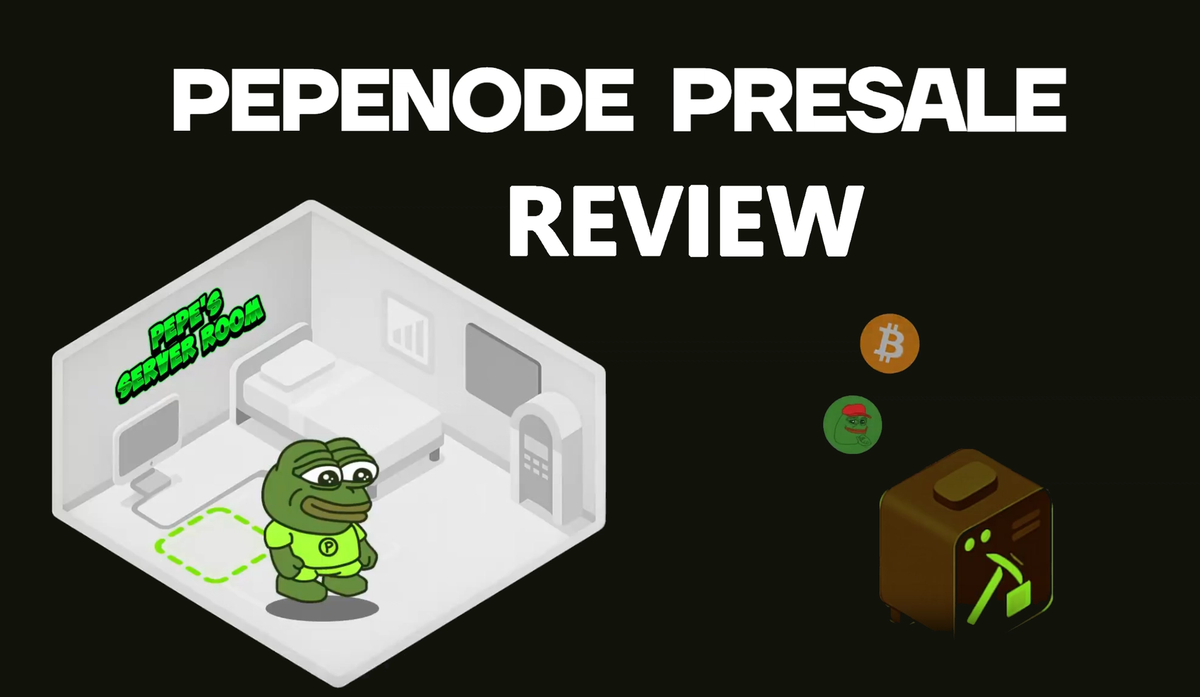
PEPENODE is a crypto project that launched its presale in August 2025. It markets itself as a meme coin combined with a gamified mining platform. The project introduces a “mine-to-earn” concept where users build virtual nodes and server rooms to generate PEPENODE tokens.
The PEPENODE presale raised $2.7 million and concluded in January 2026, when the PEPENODE token launched on Uniswap. It has been running an aggressive marketing campaign across multiple crypto media outlets.
With many sponsored articles published, some of which are disguised as independent reviews, we decided to take a closer look at the PEPENODE token and its presale to determine whether it is a legitimate project or just another over-hyped crypto scam.
PEPENODE Whitepaper Review: What the PEPENODE Token Document Leaves Out
The PEPENODE whitepaper is a short 10-page document. It summarizes the challenges the project aims to address, the solution in the form of gamified mining, a roadmap, tokenomics, and a few key technical aspects. It lays out how users can purchase and upgrade virtual nodes, earn rewards, and benefit from a 70% token burn on in-game spending.
While the concept is clearly explained and, in our opinion, appealing, the whitepaper lacks essential information.
The roadmap outlines phases but does not include concrete dates or timeframes, leaving investors uncertain about when milestones will be delivered. There is no clarity on how the team or founders will be rewarded, since the tokenomics chart does not include a dedicated team allocation.
Another missing piece is the distribution of funds raised in the presale – the whitepaper lists token categories but does not specify how the actual money collected will be managed. Finally, although the token contract was audited, the document does not commit to auditing the mining game or staking systems.

Overall, the whitepaper is minimalist, presents the project’s idea, but avoids the details investors usually look for.
The lack of transparency in fund usage, the absence of specific timelines, and the lack of additional information raise questions about whether the document provides sufficient substance for a project with such a high valuation.
These gaps in the whitepaper lead directly to another concern: the lack of transparency around who is actually behind PEPENODE.
Who is Behind the PEPENODE Coin? Anonymous Team and Neuriki LTD Explained
The team behind PEPENODE is anonymous. No developers, advisors, or public figures are named as being responsible for the project. The team has not undergone KYC verification with any independent third party, which is not suitable for projects raising significant sums.
The only official reference is in the whitepaper, which lists Neuriki LTD, a company registered in the British Virgin Islands in July 2025. Fahim Rahman is named as the managing director of this company.
However, this appears to be a shell company, likely created to comply with minimum disclosure requirements and to align with European MiCA regulations. By registering in the BVI, the actual individuals developing and controlling PEPENODE remain concealed.

This structure does not provide investors with accountability. Using offshore entities and limited disclosure may give the impression of legitimacy. Still, in practice, it leaves open the possibility that the project is intentionally shielding its operators from responsibility if something goes wrong.
PEPENODE Product Development Status: Beta Platform, Mining Dashboard, and Future Plans
PEPENODE initially launched with a beta version of its mining game. The system originally operated off-chain, allowing users to interact with a dashboard to purchase and upgrade virtual nodes and view their accumulated rewards.
Since the token launch, the project has also released a live web application at app.pepenode.io, where users can interact with the platform and upgrade nodes through the interface. The site claims the mainnet version of the system is live, although the core mechanics still rely heavily on the project’s backend infrastructure rather than fully transparent on-chain logic.
Staking is also live, with a highly advertised APY in the hundreds of percent, funded by a rewards allocation.

The existence of a functioning front-end platform represents an advancement in development compared to the earlier presale stage, when the project consisted mostly of marketing materials and a basic dashboard. However, the extent to which mining mechanics are enforced by immutable smart contracts rather than centralized infrastructure remains unclear.
The roadmap also mentions future cross-chain expansion and integration of other meme coins into the reward system.
PEPENODE Token Security Review: Simple Coinsult Audit and MiCA Regulation Concerns
Coinsult audited PEPENODE’s token contract, and the firm found no vulnerabilities. That is reassuring for the basic ERC-20 token functions, but it covers only a small part of the ecosystem. There is no audit yet for the staking system, the mining dashboard, or the planned NFT game mechanics.
The project’s whitepaper also includes disclaimers that appear influenced by Europe’s MiCA regulation (MiCAR). Since late 2024, many meme coin presales have begun adding disclaimers, refund policies, and company details to appear more compliant. PEPENODE falls into this pattern: it mentions a 14-day withdrawal right, a BVI entity, and other compliance language.
On the surface, these additions might suggest regulatory alignment, but the project still avoids meaningful transparency. Investors don’t know who the team is, how funds are managed, or how treasury tokens will be controlled. In practice, this looks more like bypassing MiCA rules than accurate compliance.
PEPENODE Token FDV: Why a $255M Valuation at Presale Looks Unsustainable
The PEPENODE token supply is fixed at 210 billion tokens. When the token launched in 2026 at $0.001212, its fully diluted valuation (FDV) already exceeded $254 million, despite the project still being in an early development stage. This valuation was exceptionally high for a project at such an early stage with an anonymous team and only a basic beta version of its product.
Shortly after launch, the market reaction highlighted the risks of such an aggressive valuation. The price dropped sharply once trading began, falling by 90% from the launch price as early investors and traders began selling.
At the time of writing, the PEPENODE token price trades at approximately $0.0001048, giving the project an FDV of $22 million. This dramatic drop from the initial valuation illustrates the gap between presale pricing expectations and real market demand.
History shows that similar presales launching at these inflated valuations also collapsed once trading began, as early buyers sold on the first opportunity.
Even if there is widespread future adoption, it is difficult to see how PEPENODE can sustain the launch market cap at this scale.
PEPENODE Presale Marketing Review: Clickout Media Promotions and Sponsored Content Issues
PEPENODE’s marketing is aggressive.
The project is promoted across dozens of media outlets, but the coverage is overwhelmingly sponsored. The marketing relies almost entirely on paid promotions through Clickout Media’s network, and we found very little evidence of organic community growth to balance it.
These articles present PEPENODE as a potential “100x” token, often without clear disclaimers that the content is sponsored. They also promote extreme staking rewards and rapid returns, along with other exaggerated claims.
Clickout Media is a marketing company that publicly offers services such as sponsored reviews, PR campaigns, and promotional media coverage across finance and cryptocurrency platforms. Because of this business model, articles appearing across multiple outlets may often originate from coordinated marketing campaigns rather than independent editorial analysis.
Independent reporting has also examined Clickout Media’s broader publishing network and its use of high-authority websites to distribute promotional content across several industries. These practices are often described as a form of “parasite SEO,” where marketing content is placed on trusted domains to rank highly in search engines.
In the case of PEPENODE, the project’s website includes a “Latest Press” section that lists numerous articles about the project. Many of these pieces come from crypto media outlets that frequently publish sponsored content, reinforcing the impression that the project’s visibility relies heavily on paid promotion rather than organic coverage.

Final Verdict on the PEPENODE Presale: Is the PEPENODE Coin Legit or a Scam?
PEPENODE presents itself as a meme coin with gamified mining features and has successfully raised over $2.7 million during its presale before launching its token in 2026.
The concept is interesting, and the project has completed a basic token audit. However, the anonymous team, a shallow whitepaper, a lack of transparent fund allocation, and an extremely high valuation at the presale stage raise significant concerns.
The aggressive marketing campaign led by Clickout Media amplifies the risks by creating a perception of organic demand that may not exist. While PEPENODE might not be an outright scam, the structure and red flags suggest it is a high-risk presale investment. Investors should exercise extreme caution before participating further in PEPENODE trading.
History shows that meme coin presales launching at valuations in the hundreds of millions almost always crash after listing. If someone is genuinely interested in PEPENODE, it would likely have been far safer to wait for the token to launch and consider buying at a lower price than to take the risk during the presale.
The token’s performance after launch also provides an additional signal for investors. Following its debut at a valuation exceeding $250 million, the price declined sharply, losing over 90% of its value shortly after trading began.
While price movements alone do not prove whether a project is legitimate or fraudulent, they often reflect how the broader market evaluates the credibility of a presale narrative once real trading begins.